Friday, July 07, 2006

The United Nations Of Poetry


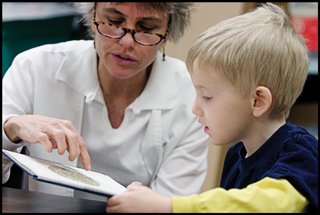
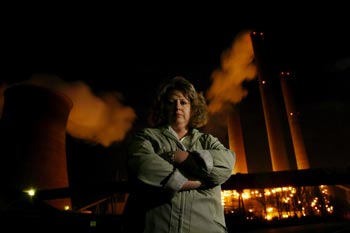
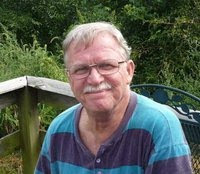
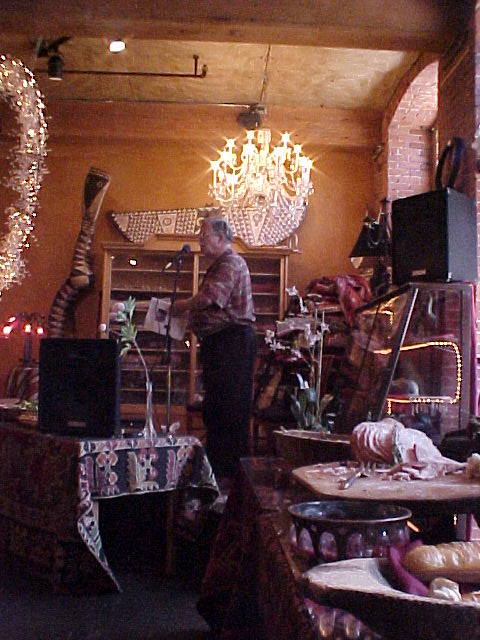
The author attempts to capture the poet at CAV, Providence, July 1st. Posted by Picasa

Let's have a merry journey, and shout about how light is good and dark is not. What we should do is not FUTURE ourselves so much. We should NOW ourselves more. "NOW thyself" is more important than "KNOW thyself." Reason is what tells us to ignore the present and live in the future. So all we do is make plans. We think that somewhere there are going to be green pastures. It's crazy. Heaven is nothing but a grand, monumental instance of the future. Listen, NOW is good. NOW is wonderful.

---Mel Brooks

The cloud is free only
to go with the wind.

The rain is free
only when falling.

---Wendell Berry

A monk asked Chao-Chou: "What is zazen?"
Choa-Chou replied: "It is non-zazen."
The bewildered monk said: "How can zazen be non-zazen?"
"It's alive!" was Chao-Chou's reply.

---Zen mondo

John Tagliabue, the late poet, spoke of The United Nations of Poetry. He created the term sometime in the early 1960s. I don't think he ever wrote a poem about it...or defined exactly what it was. It didn't seem to have an organization or charter or official members. Occasionally, in the early days of its non-existence, he said certain events or readings were sponsored by or part of the activities of The United Nations of Poetry. As the years went by, and there were more poems about "current events" turning up, he mentioned The United Nations of Poetry more and more. Many of us students and friends presumed, I guess, we were members of it...though John never said we were, and I know of nobody who ever asked for a meeting, Maybe I'll learn there were meetings somewhere. There was one on July 1st, however, in Providence, Rhode Island.

I didn't hear the term United Nations of Poetry mentioned even once during the 4 hours of wondrous tribute to our departed loved one. I didn't even think of it until I began to wonder how I'd write about the afternoon. That's when it came to me: that's what it was and that's who we are. How else to describe the astounding diversity of people who showed up? What other way than united were the laughter and tears we shared? The glowing spirit of the poet shimmered everywhere above us all.

Officially it was a memorial service on what would have been John's 83rd birthday, but he had died a month ago of what gets called now "complications from surgery." Somehow his widow Grace and 2 daughters Francesca and Dina had organized his dense little address book enough to send out invitations far and wide. There was an address of some restaurant in an old factory district of Providence...and there were directions that looked too complicated to read, so I stupidly depended on Mapquest instead to get me totally lost in there. Grace said on the phone, "I guess I should have put an RSVP on it," because she had no idea how many people were going to come. She said she thought a lot were. It was standing room only.

Clearly we were in a very chic and gourmet place. Converted from a knife factory, CAV (which reportedly stands for coffee, antiques, and victuals) is a large L-shaped room with the bar and kitchen to the center and side. Jazz gets played on a stage that can be seen by nearly every table, although you can find seclusion if you like. Lighting is by chandeliers, candles, lamps here and there. The whole place is "decorated" like a cross between an antique store and a shop specializing in tribal artifacts. In fact it is both of those besides an eatery/drinkery...and you can buy any of the art that intrigues you. Did I say there are rugs on the walls? Just the kind of place where you might expect some wise wizard to appear, blow the dust off a thick tome, and begin the incantation. And shortly, that's exactly what happened. Many wizards.

At first Cesca addressed us, thanked us all for coming, and introduced the central family table situated before the stage. Lots of Tagliabues were assembled. Then Bill Hiss came forward, representing the Administration of Bates College, where John taught all his life and many of us went to school. Bill said he'd MC the afternoon...but not so much, because there was no program and everyone hoped we'd all know what to do. Pretty much we did. Maybe the family had some idea of what it would be like, but I sure didn't. I had marveled for years at how John would send out envelopes full of poems to people, week after week, month after month. They were typed with carbon paper, preferably on a non-electric machine, and then cut to size with scissors, folded and put neatly with personal handwritten comments and greetings into envelopes, showering you---or at least your lap---with bliss when you opened them. Somebody said she thought maybe he was trying to save paper. (Probably he was trying to save postage, it occurs to me just now.) Another person said possibly everybody in the room had had a poem written especially about and for him or her. I figured I wasn't the only one---although he made you feel how special he knew you were---but I had no idea how far-reaching was the scope of his mailings.

Here came family members, some of them more "famous" than John was. They related how incredible it always was to meet him someplace, any place in the world, and what a traveler he was and how at home anywhere he always seemed. There were friends from Lewiston, Maine, where Bates is, who had driven down to tell us what knowing him in town had been like. University faculty don't always mix it up, you know, with just-folks who were born and raised downtown. John did, because if your paths crossed in a memorable way, he didn't care who you were or what you did. There were Maine poets who came, all of them recounting how Tagliabue had encouraged them, sometimes writing lengthy critiques---as poems of course---of their offerings, something I don't think he did for most of us students. I guess if you were a serious writer and you asked, he responded. At last a few of us students began to creep up to the formidable stage, and recount experiences and read a poem or 2. There were hugs and kisses with people I haven't seen in 45 years. And then some of us performed a scene and a bit more from the Mario series of 12 puppet plays. Never published and rarely seen, we tried our best to become the fantastic and mythical characters. My wife even attempted the overwhelming Green Queen (perhaps not knowing completely that usually only John played that part) and she was magnificent! And of course we wept.

When 4:00 came, Cesca and the owner did their best to sweep us out of the place. It was not easy, but they said we could continue on in the courtyard if we liked...and we did. At last, perhaps exhausted with all the intensity, we began to move individually back to our cars and our lives that had been so transformed. We were delegates to the rest of the world now. Dana touched my shoulder and said, "Grace is leaving, if you want to say good-bye." There she slowly came, this wonderful woman and artist I have known for so many years. What to say, how to say it? But as usual, she knew...and said, "O Dick, I'm so glad I got to see you now. I wanted to give you something," and she set down the beautiful orchid plant she was carrying. Then she offered me one of John's scarves...so important in the Maine winters. "I think it's alpaca," she said. I put it to my face, and the fragrance of John and their apartments in Maine and Providence filled me with memory. "Oh," I said, "I want to give you my gratitude and here you are giving me something. That's how it always is!" She smiled and laughed and we promised to talk on the phone...and then they were gone.

But that is how it is. And it's what I've learned from the meeting of The United Nations of Poetry. It's giving. You see, I've always had trouble receiving gifts and the Ultimate Gift and The Word. I've felt unworthy. I've felt I've been bad, and dishonest, and deceitful...and just not good enough to be forgiven, to be entrusted with great work, a mission. Some of that is a copout and laziness I know, and so there's all that to think about too. But the point is~~~it's not about me at all. Giving just happens. And John's poems and life demonstrate that again and again. Who deserves a daffodil? But there one is. Be grateful and just give. Don't you see?

The look and book of truth can never be unfaithful

Now it's not the first time that
I see angels
I mean snowflakes
or that I hear music
born out of what seems
silence but it is the
most necessary ( is that
easy ? ) fact in the
fabulous world of
changing events that
renewal is the law
of Providence.
It occurs in strange and at times difficult and painful
ways, death, loss of
faith; but as I see
all these minute
snowflakes in the grey
Maine day which I
cannot count any more than St. Thomas could the
angels on a pin's head
I am conscious of a quiet newness that I
declare a cool and refreshing
in some ways undecipherable
new testament.

---John Tagliabue

Monday, June 26, 2006

So You Think There's A Right To Vote?


Posted by Picasa

In this way and that I tried to save the old pail
Since the bamboo strip was weakening, about to break
Until at last the bottom fell out.
No more water in the pail!
No more moon in the water!

---Chiyono

I want to go soon and live away by the pond, where I shall hear only the wind whispering among the reeds. It will be a success if I shall have left myself behind.

---Henry David Thoreau

Since the house is on fire, let us warm ourselves.

---Italian proverb

When I read Greg Palast's column in the UK Guardian from Friday, and featured yesterday by TruthOut, I hesitated to get excited about it. Palast's stuff invariably is upsetting, but I sense a lot of resentment fueling him and also somehow his opinions just don't seem to catch fire. Maybe it's the "conspiracy" of the mainstream media that keeps other reporters and editorial writers from going near his theories. At any rate this time his article is titled "Democracy In Chains" and begins~~~

"Don't kid yourself: the Republican party's decision yesterday to 'delay' the renewal of the Voting Rights Act has not a darn thing to do with objections of the Republican's white sheets caucus.
Complaints by a couple of good ol' boys to legislation have never stopped the GOP leadership from rolling over dissenters.This is a strategic stall that is meant to decriminalise the Republican party's new game of challenging voters of colour by the hundreds of thousands."
http://commentisfree.guardian.co.uk/greg_palast/2006/06/voting_rights_act_nailed_to_bu.html

The first comment in the massive thread that erupted from the essay is by someone known as MisterD~~~

"This article conflates about five different issues in order to make the false claim that the Republicans are trying to deny citizens the right to vote. They are not. They are just trying to stop the massive vote fraud and ballot box stuffing the Democrats attempt at every election.
This is a poorly researched and poorly reasoned efort to smear Republicans as bigots. Like all of Palast's writing, it is designed to enflame the already feverish minds of the ignorant."

Hmmm, I decided to think it over for a while before running with Greg's ball. My connection with the Civil Rights Movement goes back a long way. Somehow I became a jazz fan as soon as I crossed the threshold into adolescence. (My parents thought I'd grow out of it.) You don't spend much time in the history of that music before you hear stories involving racial discrimination. So by the time I was in college and heard about a few other young people protesting segregation at Woolworth's lunch counters, I joined up. In the summer of 1961, I went to Chicago to train for Freedom Rides whose goal was shipping busloads of people into the South to encourage and help folks register to vote. These were states where poll taxes and literacy tests turned away thousands. The Voting Rights Act of 1965 was meant to remove these obstacles.

Lulled into a kind of complacency of victory and set rather at a distance by black backlash that was going on then, I didn't think about voting rights again until I heard about problems in Florida in 2000, and closer to home here in 2004 Ohio. Those of us who cried Foul around those elections generally have been ridiculed off the map for the same number of years it took to see progress in civil rights back in the '60s. Conspiracy theories just make you crazy, so why not give it up? Now comes Palast tying together election fraud and the Republican concerns about renewing the Voting Rights Act. Could he be right? Are Republicans testing the waters to see if anyone in America still is awake at all?

Pessimistically I typed "Voting Rights Act" in Google NewsSearch...and felt my jaw drop when pages of articles and editorials came up. It looks like every newspaper in the country has commented over the weekend on what Republicans are trying to do. More astonishing, most of them seem to see the same threat Palast sees. The most vocal of all are in the very states the legislation singles out as requiring special attention.

In Houston~~~

"The 1965 Voting Rights Act, much of which is permanent, choked off the Jim Crow laws that kept minorities from voting.e 1965 Voting Rights Act, much of which is permanent, choked off the Jim Crow laws that kept minorities from voting.
Section 5, which is up for renewal, made states with histories of voter discrimination get federal 'preclearance' for any changes in their voting law. Texas is one of those states.
There was good reason to subject Texas to federal review. Civil rights lawyers would wrestle down one assault on rights — a poll tax, or a literacy rule, or a morals test — only to see Dixiecrats dream up a new one.
Section 5 switched the burden of defending voter rights from civil rights workers to the federal government. Today, the rule is especially useful at the local level, where council members and others might not be sensitive to a law or procedure that would have an adverse impact on racial minorities.
When the Voting Rights Act was passed, it was easy to spot attempts to disenfranchise minority voters. Most took place in the South. In recent years, though, attacks on voter rights and access to polling places have erupted all over the map. In the last presidential election, some of the most egregious violations occurred in Florida and Ohio — states largely exempt from Section 5."
http://www.chron.com/disp/story.mpl/editorial/4001127.html

Alabama~~~

"What had happened was that a group of representatives from the South protested that, under the renewal, their states would still be required to have voting rule changes 'pre-cleared' by the Justice Department despite the improvements made since the act was originally passed.
They were joined by other Republicans who wanted to remove from the act the provision that requires ballots to be printed in languages other than English in states and counties where there are large numbers of non-English speakers.
Whatever the merits of the arguments for changes in the act, the bottom line is that a group of Red State Republicans, representing the heartland the GOP has captured and hopes to hold, have undermined their party’s hope to attract black and Hispanic voters in the upcoming election."
http://www.annistonstar.com/opinion/2006/as-editorials-0626-editorial-6f23s5543.htm

Georgia~~~

"For years, Southernors have insisted that the VRA is outdated, that the ills addressed by the act have been corrected. To a degree, this is a good argument. But it's not good enough. Real gains have been made, but there remain indications that, given the opportunity, political factions would pass laws that could present roadblocks to minority voting. Some cite Georgia's recently approved voter photo ID law, which could disenfranchise the poor and elderly, as the most blatant recent example.
One might also point out that just because the VRA has been successful, this is no reason to do away with it. Human nature being what it is, we can see no reason to let Section 5 expire because it works. In fact, that it works so well presents a solid argument for keeping it intact."
http://www.macon.com/mld/macon/news/opinion/14889907.htm

From Chicago yesterday, Clarence Page reviews voting rights violations taken to court in just the past few years~~~

http://www.chicagotribune.com/news/columnists/chi-0606250445jun25,1,7203155.column?coll=chi-news-col

From Atlanta, Julian Bond writes this powerful essay today~~~

"If murderers would promise not to murder again, we could eliminate all our laws against unlawful killing. No laws against murder — no murders.
That is analogous to the argument made by some Republicans against reauthorizing the 1965 Voting Rights Act.
We may have done wrong in the past, they say, but we won't in the future. So we can now eliminate the most effective civil rights law ever passed.
The act doesn't expire until September 2007, but a bipartisan coalition in Congress had pledged renewal this year. Now that effort has been derailed. Leading the train wreck has been U.S. Rep. Lynn Westmoreland (R-Ga.). He wants to radically alter Section 5 of the act, which requires federal permission to change voting rules in nine states.
The 1965 Voting Rights Act initially focused on six states where blacks had been systematically denied the right to vote — Alabama, Georgia, Louisiana, Mississippi, South Carolina and Virginia. Three more states — Arizona, Texas and Alaska — were added 10 years later to protect language minorities.
'The pre-clearance portions of the Voting Rights Act should apply to all states, or no states,' Westmoreland argues. 'Singling out certain states for special scrutiny no longer makes sense.'
But 'all states' don't have the history of the six originally covered by the act, including Westmoreland's Georgia.
Westmoreland knows full well that applying Section 5 to all 50 states likely will make the act unconstitutional, no doubt the outcome he wants. Singling out certain states, including Georgia, makes perfect sense.
From the end of Reconstruction forward, Georgia's white supremacist governments and private white citizens devoted considerable energy to preventing black citizens from registering to vote or casting ballots. Their tactics included murder, ballot stuffing, poll taxes, literacy tests that whites passed but most blacks failed, and wholesale intimidation.
When former Urban League Director and Georgia native Vernon Jordan testified for renewing the act in 1970, he said Georgia and other Southern states 'were the most efficient, determined and malicious in their efforts to keep black people off the registration rolls.'
In Harris County in Westmoreland's 8th Congressional District, blacks were 57 percent of the population in 1955, but no blacks were on the grand jury list, and blacks were only 2.3 percent of the trial jury list. Westmoreland's Douglas County adopted a majority vote requirement in 1968 without asking for pre-clearance when a black candidate prepared to run for office. The county was sued over this discriminatory procedure in 1975.
Since the act was last renewed in 1982, the Department of Justice has objected 80 times to proposed changes in Georgia's voting plans, finding they were discriminatory. Recently, only the Department of Justice's political appointees saved a biased Georgia voter identification law over the objections of career Justice Department lawyers. A federal court eventually struck the law down, but Georgia passed a substitute which justice's political appointees pre-cleared.
Sadly, the Southern Poverty Law Center lists 40 hate groups in Georgia today, operating from Athens to Valdosta, and ranging from the Imperial Knights of the Ku Klux Klan and Aryan Nations to the Council of Conservative Citizens and the League of the South.
Congress was justifiably proud of its bipartisan intention to renew the Voting Rights Act. The partisan objections of a few disgruntled defenders of a discredited system shouldn't be allowed to end agreement across the aisle on a law President Ronald Reagan said protected the 'crown jewel' of our democracy, the right to vote.
Westmoreland was quoted as saying about his and his colleagues' objections to the Voting Rights Act, 'A lot of it looks as if these are some old boys from the South who are trying to do away with it.'
Yup — it sure does.
We need renewal of the Voting Rights Act as is — just as we need to keep laws against murder on the books."
http://www.ajc.com/opinion/content/opinion/stories/0626edbond.html

And back to Palast~~~

"In the 2004 election, more than 3 million voters were challenged at the polls. No one had seen anything like it since the era of Jim Crow and burning crosses. In 2004, voters were told their registrations had been purged or that their addresses were 'suspect'.
Denied the right to the regular voting booths, these challenged voters were given 'provisional' ballots. More than 1m of these provisional ballots (1,090,729 of them) were tossed in the electoral dumpster uncounted.
A funny thing about those ballots: about 88% were cast by minority voters."

Robert Kennedy's article nearly 4 weeks ago and Steven Freeman's new book that I've referenced before attempt to chronicle a pattern to the election problems seen by many over the past half dozen years...particularly in Florida and Ohio. Accusations were made that particular voting blocs were disenfranchised, and the pattern described clearly favored the Republican Party. Now Republicans seem to be looking squarely into the spotlight at the scene of the crime. Is this possible? Or are we going to get a new spin that will send us back to our shrugging apathy?

Kennedy's article is here~~~
http://www.rollingstone.com/news/story/10432334/was_the_2004_election_stolen/1
and The Boston Globe has a new statement by Freeman today~~~
http://www.boston.com/news/globe/editorial_opinion/oped/articles/2006/06/26/a_call_to_investigate_the_2004_election/

Wednesday, June 21, 2006

A Woman Shall Lead Us


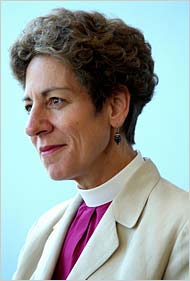
Bishop Katharine Jefferts Schori is the first woman to lead the Episcopal Church.
Michael Houghton for The New York TimesPosted by Picasa

Friend, hope for the truth while you are alive.Jump into experience while you are alive!What you call "salvation" belongs to the time before death.If you don't break your ropes while you are alive, do you think ghosts will do it after?

---Kabir

Actually there is no real teaching at all for you to chew on. But not believing in yourself, you pick up your baggage and go around to other people's houses looking for Zen, looking for Tao, looking for mysteries, looking for awakenings, looking for Buddhas, looking for masters, looking for teachers. You think this a searching for the ultimate and you make this into your religion. But this is like running blindly. The more you run, the farther away you are. You just tire yourself, to what benefit in the end?

---Foyan

A human being is a part of the whole called by us "the universe," a part limited in time and space. He experiences himself, his thoughts and feelings, as something separate from the rest---a kind of optical delusion of consciousness. This delusion is a kind of prison for us, restricting us to our personal desires and affection of a few persons nearest to us. Our task must be to free ourselves from this prison by widening our circle of understanding and compassion to embrace all living creatures and the whole of nature in its being.

---Albert Einstein

There are many peculiar terms in the Episcopal Church. "Episcopal" is one of them. The word in Latin means "bishop," which hardly differentiates this church from anything known as Anglican throughout the rest of the world. Its members want their own identity in the United States, so we use Episcopal instead of Anglican. Apparently that's only the first of many annoyances we cause.

The physical organization of the church resembles the Catholic, from which it broke so King Henry could keep trying out wives until he found one to suit him. (Not much spiritual inspiration there.) Other Protestant denominations have bishops and such, who are leaders elected in some way or other. In the Episcopal Church there are 2 houses, like Congress: the House of Bishops I suppose is like the Senate, smaller and with more clout; the House of Deputies is similar to the House of Representatives.

The "president" of the whole Anglican Community is known as the Archbishop, and as anybody can become a priest and a bishop anybody could get elected Archbishop too. Well...until now, any MAN could be Archbishop. And to be more specific, any clearly practicing heterosexual man. A priest needn't be married but it's better, if he's going to have some kind of sexual partner living with him, that it be a woman. You know, help with church auxiliaries and picnics, choir practice, Sunday school...that kind of "womanly" thing. I suppose our Catholic friends laugh up their sleeves at how complicated all this has become for us. We have nuns too.

The Church here is divided up into dioceses, which are like sections of states and territories. A bishop is elected to preside over the individual churches in each of them. Our bishop currently is named Price, and 2 hours ago he sent out an email message announcing an extraordinary meeting will be held this morning at 10:45. Last year the Episcopal Church in America elected a bishop in New Hampshire, who is openly gay, with a partner and all that. The Anglican Community objected in a document known as the Windsor Report. Pretty much, we were told to get in line...or else. We put a moratorium on electing any more bishops until our next General Convention of Bishops and Deputies, when we'll come up with an answer to the Windsor Report. That time is right now.

Last night the current Presiding Bishop, who is Frank Griswold, "proposed a rarely used prerogative of calling for a Joint Session of the two houses for today following the Eucharist. The purpose of the session is to craft a response that will truly represent the mind of both houses," according to Bishop Price's message. The representatives in each house had debated all day yesterday and into the night, without coming up with a definite resolution to present to each other for confirmation. Under discussion is not only the continuing freedom for gay and lesbian people to become bishops in this church, but the official blessing of gay union in our services.

On Sunday, as you probably know by now, we elected the first woman Presiding Bishop, or head of the Episcopal branch of the Anglican Union. The Convention may run out of time before we get to abortion and the invasion of Iraq.

This morning The New York Times ran a pretty nice profile of Katharine Jefferts Schori. Here it is...while we await further developments in Columbus~~~
--------------------------------------------------------------------------------
The New York Times
June 21, 2006
For an Episcopal Pioneer, the Challenge Is to Unite
By NEELA BANERJEE

COLUMBUS, Ohio, June 20 — As she talked about her past and her future, Bishop Katharine Jefferts Schori on Tuesday described a life filled with so many unusual steps — including learning to fly and entering the Episcopal priesthood at age 40 — that it seemed to suggest an almost congenital appetite for challenge.

She now faces one of her greatest challenges, one that she has called "a grand adventure."

Bishop Jefferts Schori's election on Sunday as the first woman to lead the Episcopal Church has cast her deep into the maelstrom that has engulfed the American arm of the 77-million-member Anglican communion.

"We need to send a message that we fully intend to be part of the communion," she said on her way to the daily Eucharist service. "All of this calls for us to grow and stretch. I think we're willing to stretch very far indeed."

An angry debate about the election of a gay bishop and the blessing of same-sex unions in the United States has frayed the church at home and threatened to fracture the Anglican communion, the world's third-largest church body. Lay and clergy representatives at the Episcopal Church's triennial general convention here are trying to hammer out a response that would satisfy the Archbishop of Canterbury and those Anglican primates abroad who are profoundly offended by the Episcopal Church's actions.

Bishop Jefferts Schori, the 52-year-old bishop of Nevada, will have to sell whatever decision her church makes to the rest of the global communion, a task that may be made more difficult by her sex. Most of the 37 other provinces of the communion do not ordain women, and the willingness of those primates to accept a woman, particularly one who has endorsed gay bishops and same-sex unions, will only become clear over time.

A tall, slender woman who speaks in a soft alto, Bishop Jefferts Schori was born March 26, 1954, in Pensacola, Fla., the oldest of four children. She grew up around Seattle and in New Jersey. But Bishop Jefferts Schori returned to the West Coast to attend college at Stanford University and then to pursue a master's and doctorate in oceanography at Oregon State University. Her master's work dealt with "things that live in mud," on the Oregon coast, she said.

Bishop Jefferts Schori's family seems to be defined by staggering competence.

Her father was an atomic physicist who became an astrophysicist and then went on to help invent a system to tag and code salmon. Her mother had a degree in comparative literature but later became a microbiologist. Her husband of 27 years, Richard M. Schori, is a retired theoretical mathematician. Her 24-year-old daughter, Katharine, is a pilot in the Air Force.

Bishop Jefferts Schori has been flying airplanes since college and took up rock climbing with her husband, a skilled mountaineer. She is fluent in Spanish.

Bishop Jefferts Schori's parents were Catholics who left the church when she was about 9 to join an Episcopal parish, she said.

"We went from a liturgy in Latin to one in English," she said, "from a large and anonymous church to a small and intimate one."

Her turn toward the ministry began more than 15 years ago, when her opportunities for work in oceanography were narrowing. At the same time, several people in her congregation told her she should become a minister. She said she studied and prayed with her pastor in Corvallis, Ore., and the answer became clearer over a period of years.

"My sense of call was like looking at a series of doors closing and others opening, not like there were words on fire on the wall," she said. "It was this dawning awareness that, 'Yes, it makes sense, that there is a coherence to the pieces I am experiencing.' "

Bishop Jefferts Schori was ordained in 1994. The church first ordained women in 1976.

When she walked down the hall toward the Eucharist, a woman in a wheelchair flashed her a smile and a pink button that read, "It's a girl!"

But to the Episcopal Church's critics, Bishop Jefferts Schori's election is another step in the wrong direction, given her liberal theology and her sex. Already, the diocese of Fort Worth, one of three that does not ordain women, has sent a letter to the archbishop of Canterbury asking to be placed under the oversight of a different primate. No decision on that is expected soon.

The archbishop himself sent rather wan greetings to Bishop Jefferts Schori, that in part cautioned that "her election will undoubtedly have an impact on the collegial life of the Anglican primates; and it also brings into focus some continuing issues in several of our ecumenical dialogues." That translates into concerns that other Anglican primates may not accept her, and the Vatican and Eastern Orthodox bishops might not, either.

If her fellow primates are not willing to sit at the table with her, Bishop Jefferts Schori said, she is willing to get up and follow them as they walk away.

"I think that building trust in other parts of the communion is crucial because there is anxiety about a woman in the boys club, as some have said, though I already know a number of the primates," she said. "There is anxiety about the place of the Episcopal Church in the communion. But we want to show that the main thing is that we aren't here to argue about matters of sexuality. We are here to build a holy community."

Copyright 2006 The New York Times Company
http://www.nytimes.com/2006/06/21/us/21episcopal.html?_r=1&th&emc=th&oref=slogin

Saturday, June 17, 2006

Ilona: Back In The B-USA


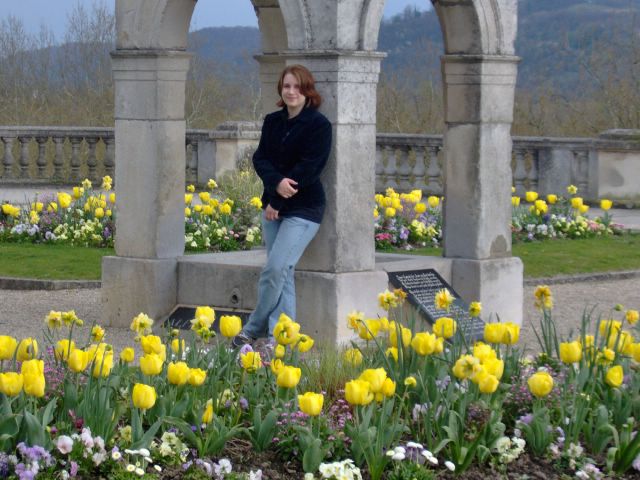
Ilona newly arrived, like Spring, in Pau. Posted by Picasa

To get this chance is very difficult. To be born as a human being is very difficult. Among uncountable sperms and eggs...you are here. Wonderful chance. Congratulations!

---Soen Nakagawa

You cannot stay on the summit forever. You have to come down again....One climbs and one sees; one descends and one sees no longer, but one has seen. There is an art of conducting oneself...by the memory of what one saw higher up. When one no longer sees, one can at least still know.

---Rene Daumal

When it's over, I want to say: all my life
I was a bride married to amazement.
I was the bridegroom, taking the world into my arms...

---Mary Oliver

Ilona's been back in the Bush United States of America for 10 days. I don't mean to politicize this essay, but they were her first comments: all these flags everywhere, all these pushy, frightened people. Since March 20th she had been in France, away from all this: blaring news reports of optimism, military state of mind, body searches, and thoughts of terrorists at the front door. "They don't have that in France," she said...and it was impossible to imagine.

The first couple days she spoke in French all the time. I found I could understand what she said pretty well, and so I became interpreter for her mom and grandmother. I know I couldn't have translated exactly, and certainly not spoken back...but I did OK with my occasional replies. Amazing! So now it was possible to imagine how someone only 14 could go to another country, take the remainder of her 9th grade there in French, make new friends, and have an absolutely wonderful time.

These first days we have learned a lot. I knew that would be the case, but had no idea what it would be like. She is calmer, stronger, deeper. I don't want to suffer illusion here, but she seems to perceive herself with new and more maturity. Is it possible? As I think this, she says so herself. She tells us she feels she has learned true compassion for other people. I know that's pretty abstract and a far reach for 14, but indeed she has maintained an equilibrium.

And Dana and I certainly have inadvertently provided the challenge. The weekend before her flight touched down, we had been in Columbus at a highly-charged political intensive for 2 days. We still were chomping at the bit to get change happening at the grassroots! I think on the drive home from Cincinnati, Dana launched into a complaint about the Ohio legislation pending to ban all abortion in this state, no matter how the pregnancy was caused or what the result might be. Ilona wanted to plug her ears. How grand it had been to live free of a restrictive society for some months!

Then almost immediately, Dana and I were off to Columbus again, this time to volunteer during the first couple days of the Episcopal General Convention. Yeah, that's the one about whether a bishop can let anyone know he's gay or not. Ilona was back. Plus, there have been evening meetings to help organize congressional campaigns for the upcoming election. And I'm preparing for a 2-week theater run of Inherit The Wind, the monkey trial play. I mustn't forget being on the phone and computer all the time planning for the memorial for Tagliabue...which will mean a trip for us to Providence for a few days shortly.

Ilona said, "Oh let's keep going and get out of the country for the Fourth of July." Rebellious talk, but she really means she misses that French countryside so much already. And her new friends, who sound so delightful. Do you know what they did? They gathered together and greeted her and her friend at their school on the final day. They had made a card, with all their pictures on it and each signed a special greeting. It is so beautiful, and certainly her most prized keepsake of the trip.

Well, there were some problems over there. We had tried to prepare the family chaperoning Ilona she might have homesickness and physical upsets along the way. The homesick part passed quickly but there were some maladies here and there that probably were stressful. And there's always cabin fever, even just among a family of 5, never mind adding an outsider. Her new digital camera was picked out of the pocket of her friend at the Louvre. There were too many American tourists in Paris, and the shopkeepers were impatient. Alas, Paris was the biggest disappointment. (Papa confesses a little relief she didn't meet some boulevardier there for whom she wants to pack her bags and go back to a Moulin Rouge life.)

She hiked the Pyrenees with her friend, and his mother and stepdad. They were up there for days, spending nights in little lodges, bed & breakfast kinds of homes, and Easter in tiny Lascun. She has a couple hundred photographs of the experience, and it truly looks to have been idyllic. She loves the Basque traditions. She brought us goat cheese, and made sure we had some while we still were in the airport parking lot. It was heaven!

Dana has whisked her off again this weekend for family business in Western Pennsylvania. They should be back tonight though...and I so look forward to see her. (And yes, Dana too.) Her brother Jeroch was over here yesterday and he reflected too how she has grown in every way. He and I hiked through the woods before taking off for a baseball game with a community team he's on. I had such a great time, and his lady Karen was there to keep me company. Hey, troubled as this Old Glory may be these days, we still have hot dogs at the ballpark. And jazz. I'll try to remember that when the French girl gets back.

Saturday, June 03, 2006

John Tagliabue: Last Words


John and Grace Tagliabue were photographed in the Muskie Garden at Bates College in 1998 by Phyllis Graber Jensen, shortly before their move to Providence, R.I. John died on May 31. Posted by Picasa

The important thing is to do, and nothing else; be what it may.

---Pablo Picasso

You yourself are time---your body, your mind, the objects around you. Plunge into the river of time and swim, instead of standing on the banks and noting the course of the currents.

---Philip Kapleau

Who whispered, souls have shapes
So has the wind, I say.
But I don't know.
I only feel things blow.

---Stanley Kunitz

You can, you do...prepare---sometimes for years---for the last word, the final departure...of a friend, a loved one. But we're never really ready when it comes. Still the shock. The welling up, unexpected sobbing. Breaking down...alone or with a comforting hand upon one's shoulder. It cannot be contained. The grief.

And so it came...yesterday afternoon, while I was down at the garden, the phone call's recorded message telling me John Tagliabue is gone.

Exactly a month ago his last letter arrived announcing the "big operation" would be "tomorrow morning, might take 4 - 7 hours!!" Nearly 83, John had agreed to extreme measures to remove part of a pancreas gone bad. There were complications...and another surgery...and then the final morphine drip. With wife and 2 daughters in the room reading him his poems, John gave us the slip and danced lightly further into the fantastic. May I share with you just a few of the last things he wrote?

++++++++++++++++++++

Dear sensitive thoughtful shaken one, Shakespeare student, praised actor, stirring one, Dick Carlson,

I wanted to cheer myself up a bit
so I remembered what Amy Clampitt wrote about me:
"John Tagliabue writes out of a deeply sacramental sense of nature and history. He is, moreover, that rare person to whom poetry appears to come as naturally as breathing. It comes to this reader, poem by poem, as a Franciscan act of courtesy and praise."

The Collected Poem

I didn't want to be
an entertainment commodity
a seminar commodity
an attitude to be approved of
by this fashion or that ideology
I had no plans or programs or theories for it
but it was from my heart
of no importance
of all importance
it was not to be named or foretold
it alone gave me freedom.

+++++

Particularity and
some also call it freedom and Democracy

Something in
my biological nature
(it must be cosmic ? ) wants me to get up and
yawn and
then pee and then have my 1st meal of the day,
coffee, breakfast,
and later more, day by day, mile by mile,
to imbibe,
to chew, to make faces and acts, to act up,
to have
more or less yearnings, how habitual ! to write
phrases, millions
of them, moods, billions of them, to listen to
the more and more
hideous world news, politics, economics, murders
and murders,
indeed one has to be strong, very strong, to get
through the
so called ordinary day year after year after year,
and now it's
almost 82 years that the biological and cosmic functions
have been particular
in me.

+++++

Drizzle and repeating Success

The delicate new leaves are certainly being visited
by thousands of
delicate rain drops day after day after day and
the young bridegroom
is visiting night after night and often in the daytime
too the new
young bride she of the delicate skin, hands sliding
on the body,
warmth in the ease, the curve of the young breast,
the penetration
of the mesmerized devout husband, he who plays
like a light
magician and musican on the instrument of bliss
with the
happy instrument of bliss and all around for
miles and
miles and forever are the necessary new blossoms
flowerings,
the drizzle and the continuous dizziness night after
night
day after day in the delicate celebration of
marriage perfection.

+++++

Master T.S. Eliot finely pronounced it the Waste Land

From my lofty 4th floor window
I see it,
there goes off the 1st black car of the day,
a man
in a tin can gliding like a coffin, drizzle
day,
business day, from computer to computer, from sigh
to sigh,
poor trapped man industrious and trapped in his bureaucracy
while more
nuclear bombs are being prepared, more nuclear waste
is being
piled up, while more fresh young soldiers are being
sent off
to be slaughtered - for Democracy for Freedom for
Wall Street
for Corporation and Madness and More Corporations and
Madness;
some more coffins will glide by in Edgar Allen Poe's
Country
of Quote the Raven and Advertisements, Dental Ads
and Viagra
and Constipation Cures, More Advertisements for Cars and
Cheerfulness
in Routine Despair.

+++++

and from the last letter...these 4~~~

And faith ? Certainly Charity

They don't care about that - the frivolity,
the foolishness,
the insane ambitions of politics, illusions
ridiculous of "power" -
the Springtime daffodils, magnolia, blossoms
of all kinds, they
simply Appear, miraculously Appear; I ask you
song of myself and
friends not to disappear but be enlightened as
the daffodils, as
April thoughts of resurrection, baffle elate,
not late,
the future centuries with hope.

All kinds at the bib, bibles, 1st and last suppers

What are you going to do to make it,
lo Spirito Santo ?
the mosquito, the weed, the clown, the tormented
philosopher, what ?
Hamlet at the crossroads mumbling to the gravediggers,
Christ on the
Cross Exhausted, He who gave away His sermon on the Mount,
He who
said with Him we can move all mountains. Someone with a
twinkle
in his eyes and humored looked up from the spaghetti he was
enjoying
and said - good, you like to philosophize, you help us pass
the time.

Being is its own reward for being.
Beauty is its own reward for being.

Weeping is its own wet reward,
I hear the pitter patter of the rain,
it is twice blessed, it blesses him or her
that gives
and those who hear and see and sometimes sing; weep,
O skies,
you skies that Turner in his glory, that Tiepolo
in his
glory also and others, tried to paint; we faint
from weeping,
we fortunate to have loved and loved and loved.
Skies could not
be higher than we weeping. Sleep awhile, keep
the secrets
of what we call infinity. "The more I give, the
more I have,
for both are
infinite..."

Sensitive Observer, be a night in armor

Watching
the man on the Cross or
the person at the dark or shattering light
crossroads
in pain or perplexity is great pain for the
mother or
lover, receiving the news of the agony or death,
the amputation
or blindness of the son or soldier perplexes
agonizes
as pain can do unto death; dear weeping
daughter,
tortured relative, if you must weep weep - not
then sleep,
awake and lifetime recollect all my thoughts
and acts
of love.

John Tagliabue's last words to me were these~~~

What I know as I Approach 83 is that much is unknown & that I've had a most helpful wonderful wife & loved family & good friends (you are one of them - ); and I want to say thanks - & Best Wishes to us all

John

http://www.bates.edu/x117650.xml

Wednesday, May 17, 2006

Are The Democrats Poised For Victory?


"County Election" by George Caleb Bingham 1851 Posted by Picasa

Bring yourself back to the point quite gently. And even if you do nothing during the whole of your hour but bring your heart back a thousand times, though it went away every you brought it back, your hour would be very well employed.

---St. Francis De Sales, On Meditation

It is important to see that the main point of any spiritual practice is to step out of the bureaucracy of ego. This means stepping out of ego's constant desire for a higher, more spiritual, more transcendental version of knowledge, religion, virtue, judgment, comfort or whatever it is that the particular ego is seeking.

---Chogyam Trungpa

To find perfect composure in the midst of change is to find nirvana.

---Shunryu Suzuki

At my workplace the other day, a retired social studies teacher, in to substitute and an astute Republican, challenged us assembled Democrats in the lunchroom. We're in Ohio remember, where the gubernatorial election in November will decide between Democrat Ted Strickland, a sensible and friendly man, and Republican Kenneth Blackwell, deranged and perhaps crooked evangelist. Our Republican friend said, "If you guys can't win this time, you'll never win!"

Not counting the distinct possibility that both the 2000 and 2004 presidential elections were rigged, it would seem the Democrats have issues galore and an increasing advantage as the campaign season begins. But what do we see, what do we hear? I see business-as-usual, I hear snoring. Where is thundering oratory about corruption and injustice? I am not alone on the brink of dismissing the Democrats as out to lunch. What follows is a review of Ted Kennedy's new book, written by the publisher of Harper's Magazine~~~

Edward Kennedy's Bland, Tepid Book

Posted on Sunday, May 14, 2006. Edward Kennedy and the Democrats' dwindling hopes. Originally from The Providence Journal, Tuesday, May 2, 2006. By John R. MacArthur.

If you want to know why the Democrats are unlikely to retake the majority in either house of Congress this November, you need look no further than the boilerplate party platform, just published, entitled America Back on Track and allegedly written by Sen. Edward M. Kennedy (D., Mass.). Already, that Kennedy claims to be the actual author of this "book" reveals an unbecoming vanity—common to his father and late brothers—that weakens the cause of defeating President Bush's right-wing hordes. But worse is that one of the last, semi-authentic liberals in the upper house would let his name be used by a party machine that seems determined to maintain its minority status in Washington.

With Bush way down in the polls, Tom Delay in disgrace and Iraq a growing disaster, you would think that the Democrats, including Kennedy, might sense an opportunity. Read this committee-written tract and witness the opportunity squandered, just as it was squandered in 2004 by the junior senator from Massachusetts, the “Kennedyesque” John Kerry.

To be fair, Ted Kennedy does acknowledge a “collaborator” for America Back on Track named Jeffrey Madrick, the editor of Challenge Magazine. But it's not fair to poor Madrick to be saddled with such a task, or blamed for the result, even if he was well paid.

Turgid, often self-contradictory, and always predictable, this book—if it had to be published—should have been ghosted by somebody with the courage to reject at least some of the bromides mandated by a party leadership in rapid decay.

Which isn't to say that America Back on Track is useless. Viewed as the Democratic Senate Campaign Committee platform for the 2006 campaign, it has value as a summary. Kennedy/Madrick marshal lots of alarming facts and statistics to buttress their criticisms—overly polite—of Bush and the belligerent Republican majority in Congress. For example, in the realm of Bush administration secrecy, I didn't know that Congress's nonpartisan General Accounting Office had to resort to a lawsuit (unsuccessful) for the first time in its 80-year history to try to pry loose the membership of Vice President Dick Cheney's notoriously secret energy task force.

Regarding America's class, race and market-distorted education system, it's interesting to learn that France and Germany, on a percentage basis, graduate twice as many students with bachelor's degrees in science, math, computer technology and engineering as the U.S. does—this, in part, because U.S. pharmaceutical companies pay their MBAs so much more than their PhDs. On average, say the authors, U.S. “teachers earn . . . almost $8,000 less than comparable graduates in other fields, and the gap almost triples to $23,000 after fifteen years.”

Conventional liberals, Kennedy/Madrick want the federal government to increase its paltry contribution to public schools, still too reliant on the class-biased, locally levied property tax. Washington now provides only 8 percent of K-12 funding, ensuring that Bush's “No Child Left Behind” program will remain a cruel fraud (Howard Dean called it “No Child Left Untested”).

Addressing America's increasingly sordid labor market, Kennedy/Madrick note the obvious: that workers can't live decently on the minimum wage—frozen since 1997 at $5.15 an hour—particularly since there's no national health insurance. Disgusting enough, but worse when you learn that 86 percent of low-wage food-service workers receive not one day of paid sick leave.

But as Kennedy systematically kneels at each station of the cross of liberalism—racial equality, environmental protection, universal health care and international cooperation among others—I can't help being struck by the timidity of someone supposedly so far to the left of the American spectrum and so politically secure in his position.

If you can wade through the sea of blandness, all the way to the end, you might conclude that the country is in dreadful shape—steered by a reckless and tyrannical president; mired in an utterly unjustified foreign bloodbath; dominated by jeering plutocrats and shyster corporations—and that something radical needs to be done. In the face of this crisis, Kennedy et al. offer clichés, sometimes contradictory, in the voice of an advertising agency: “Terrorism is our greatest threat . . . ”; “among our most tragic errors is that we have not clearly defined our new enemy”; then, apparently thinking better of the first statement, “terrorism is our newest enemy, but the spread of nuclear weapons remains our greatest threat.”

Meanwhile, Kennedy can't get the economic threats straight either. He wants a “job-creation tax credit” in the U.S. to combat job losses and wage declines caused by “offshoring.” But he evidently hasn't considered the vast wage differential between Springfield and Shanghai. Like other Democratic “free-traders,” and “pro-immigrant” politicians, Kennedy can't reconcile his supposed love of the American working stiff with his distaste for protective tariffs.

Absent high tariffs on cheap Chinese imports, and without a substantial, government-driven transfer of wealth from the top (where Kennedy lives) to the bottom (where the stiffs reside), all the “job training” in the world won't do much to ease the pain. Raising the minimum wage would help, but unless there's a limit on the flood of desperate immigrants—“guest workers” or illegals—you can't expect the free market to force wages up “naturally” to a humane level. You can't have it every which way. So Kennedy ducks and proposes “community-impact statements” when a corporation ships its assembly line to Mexico or China. Thanks, Ted.

He also ducks on energy. The market (and higher taxes) can promote conservation and fight pollution—indeed, we should welcome higher oil prices to discourage consumption and increase fuel efficiency. But Kennedy only suggests more stringent government mileage standards for cars and trucks because he's afraid of opposing cheap gasoline. At the same time, his call for greater investment in “alternative . . . energy, especially renewable sources such as solar, biomass, and wind energy” is hypocritical given his steadfast opposition to the proposed Nantucket Sound wind-energy project.

As for Iraq, “it's hard to maintain with a straight face that the war was justified” but Kennedy the party man dares not fall out with Democratic hawks and declares that “success in Iraq is essential . . . ” This is both asinine and cynical. Imagine reading these two phrases together at the funeral of your son or daughter killed in the Sunni Triangle.

I wonder what would have happened if Ted Kennedy had really written his own book, free of party dogma and the ghosts of his brothers. A radical notion, but I've heard from mutual friends that he has an authentically generous heart. And even the professional Kennedy hater Howie Carr admits that Ted Kennedy has a sense of humor, a commodity sorely lacking in America Back on Track. In his book, The Brothers Bulger, Carr quotes Teddy's response to a restaurant meeting with the scary and obdurate Billy Bulger, the longtime Massachusetts Senate president. Bulger had insisted on ordering the most expensive items on the menu, all the while refusing to compromise with Kennedy. “I don't know whether we should try to persuade him,” Kennedy remarked to an associate. “I know we can't afford to keep feeding him.”

It's never too late to get back on track. Just ask the former drunk driver George Bush.

About the AuthorJohn R. MacArthur is the publisher of Harper's Magazine.http://harpers.org/EdwardKennedyBlandTepid-129439.html

Thursday, May 04, 2006

Worker-Owned


Messenger photos by John Halley
Slicing and wrapping bread at Crumb’s Bakery in Athens are, from left, Jeroch Carlson, Jen Strecker and Lisa Trocchia- Balkits. The bakery is marking its 20th year as a worker- owned business. Posted by Picasa

The flowers in the breeze are swaying, swaying,
The whole world is out a-Maying.

---Genevieve Mary Irons

Somehow---I [Jakuso Kwong] didn't drop it---the teacup, a temple treasure, dropped itself. You know how those things go? You're positve you didn't drop it, but somehow the teacup left the table. And I missed it and it fell on the floor and broke! And I felt SO bad. And then Katagiri Roshi went, "Oh ooooooh." And the Suzuki Roshi went "ooooooh, ooooooh, ooooh, ooh, oh." Then my mind started working. I could glue it back together! But Suzuki Roshi came over and we picked up the pieces. And he took the pieces and he stuffed them into the garbage so deep that even my mind couldn't get to them.

---"Dropped" Zen

All human beings should try to learn before they die what they are running from, and to, and why.

---James Thurber

The other day it was pleasant to see our son's picture on the front page of the local newspaper...and like any proud papa I want to preserve it and show it around. It's also a good chance to describe the particular organization of the bakery, where he has worked for a few years now and evolved into a position of some shared managerial responsibility. He's very happy with what he's doing. The Athens community has an ongoing interest in these kinds of business opportunities and that spirit is a main reason so many folks move here. In case you missed it or live a distance away, here's Jeroch and a copy of the article~~~

The Athens Messenger
A community climate
Crumb’s celebrates 20 years as worker-owned
Matt Gallagher
Messenger staff writer
Tuesday, May 02, 2006

Getting up to bake before the sun rises is a labor love, and workers at Crumb’s Bakery in Athens have been doing it for many years. This year, the bakery is marking its 20th year as a worker-owned business.

The bakery had its struggles and growths, its early morning frustrations and baker meditations. But being worker-owned instills a sense of community and ownership among the workers, and a sense of fulfillment that eases the tension of the early morning alarm clock.

“Being worker-owned creates a sense of cooperation that leaves room for a whole range of personality types,” said Jeremy Bowman, who has been a Crumb’s worker-owner for more than 10 years.

“Things can get grueling and the work can be arduous, but it’s labor that we love. If the bosses are in the trenches working just as hard as anyone else, there’s this sense of ownership that develops, a pride in what we do.”

The bakery is run by a board of directors made up of employees who work at least 20 hours a week. Everything is done by consensus, and everything gets done through cooperation and collaboration.

The bakery was formerly owned by Steve Koch on a much smaller scale. When he learned he was going to be a father, Koch approached the Worker Owned Network to see what it would take to make the bakery a worker-owned business, according to Charlie Moseley, one of the founders of Crumb’s.

The Worker Owned Network — which is now the Appalachian Center for Economic Networks — negotiated the purchase of the bakery and helped train workers to manage the business and take over its operations.

The Worker Owner Network helped Casa Nueva become a worker-owned business in 1985, and also helped start several other worker-owned businesses that failed to stand the tides of time. Casa Nueva and Crumb’s are the only local worker-owned businesses to survive.

Crumb’s quickly grew, and its five worker-owners expanded to 16, tripling its production that was then sold in health food stores throughout Ohio and surrounding states.

“We made the decision we wanted to be a respected bakery and increase our business,” Moseley said. “You don’t get a lot of administrative talent with people who are underemployed, and we needed a lot of guidance. We were trained for six weeks and then had to do it all ourselves, everything from marketing to production to sales. And we did everything on a consensus basis.”

Like all new adventures, there was a certain amount of risk involved. Not only did the worker-owners have a profit-sharing agreement, they also agreed to share any losses.

http://www.athensmessenger.com/main.asp?SectionID=1&SubSectionID=273&ArticleID=530
Copyright © 2006 The Athens Messenger, Brown Publishing Company

Saturday, April 15, 2006

Easter In Lascun


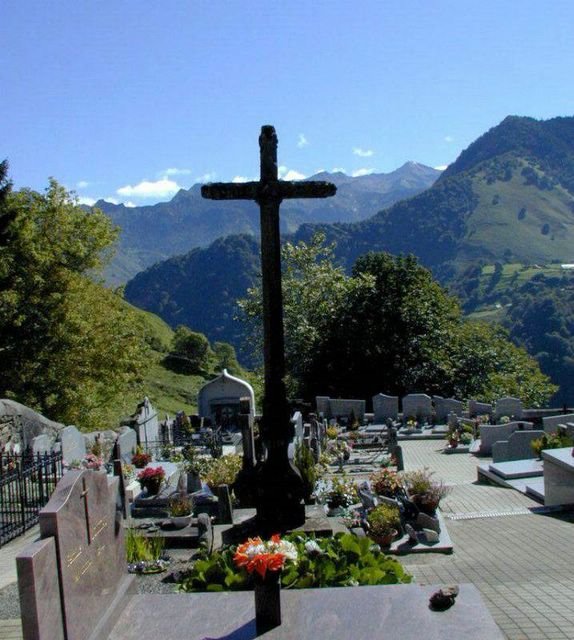
A photo of a churchyard in Lascun Posted by Picasa

How can I construct my humble hut right here in the midst of Oxford Circus? How can I do that in the confusion of cars and buses? How can I listen to the singing of birds and also to the leaping of fish? How can one turn all the showings of the shop window displays into the freshness of green leaves swayed by the morning breeze? How am I to find the naturalness, artlessness, utter self-abandonment of nature in the utmost artificiality of human works? This is the great problem set before us these days.

---D.T. Suzuki, addressing a conference of world religions in London, 1936

Let life happen to you. Believe me: life is in the right, always.

---Rainer Maria Rilke

Winter having come,
the crows perch
on the scarecrow.

---Kikaku

Ilona is in the Pyranees this Easter weekend, where snow may cover the mountaintops all the time...so Kikaku's observation may not be completely inappropriate today. Besides, the cross is something of a scarecrow too...and in the winter of our discontent the crows sit on it and caw away.

No more sermons today in this quiet day of expectation and hope---unless I can't help it. The 6:00 morning here was utter mystery. We have a new pup that Jeroch rescued, as his chain had become entangled in a bridgepost. He must have broken loose with no ID, so we've welcomed him in. We named him Jacques in honor of Ilona's school quarter in France...and that was before the vet told us he's mostly Jack Russell terrier. Down the hill he went after a herd of deer breakfasting in the meadow, waking the late risers among the bird population.

It stormed here all night with lots of rain, but thankfully little thunder and high wind and no tornadoes, at least through our land. I haven't checked the news yet, but of course we were worried given what Iowa got yesterday in the full explosion of this storm system. I think I heard the news say there were so many tornadoes in Iowa no one even could count them. I dread the next time I'll hear my rightwing friends tell me all this weather of the past couple years is a natural cycle. "People have NO effect on the climate," I heard taught in a Middle School science class this week.

The air was wonderfully clear and just a little cool. A miststeam was everywhere. The dispersing clouds revealed a brilliant Jupiter in the southwest, but the gold decoration on the cloud fringes told me the moon was just below. Sure enough, a few minutes later there she was, looking still full but rather frowzy and tired, as if she'd been kept up all night by a stormy lover. The conjunction is a magnificent moonset to look for if you're a Sunrise Service person tomorrow.

We've been missing Ilona especially as Easter approaches. She is active in the Episcopal services we attend, helping the priests...and her absence around the altar hurts. No Easter baskets this year for the first time in our marriage. Empty basket syndrome. But she called us Thursday at dawn here. Her friend Keenan's mother had arrived from Cincinnati, where she is a physician. His stepdad is an avid hiker, so off they were going to a little town of population 200 called Lescun. The place is right on the major trail that traverses the entire mountain range.

Ilona says she definitely will be in a church tomorrow morning, and I imagine the experience is going to be just amazing. We went to a service at a little church on Georgian Bay a couple years ago, and all the references were to a great tradition of fishing in the town. I wonder if the people of Lescun herd sheep or something. This is the heart of Basque country up there, and I know she is curious about that culture. O gee, I am so envious!

I think on Tuesday they're going on into Spain to Pamplona for a couple days. This is where Jeroch's friend Karin just spent the last couple months. Both girls were at DeGaulle the same day, missing each other by one hour. Then some more time at San Sebastian before returning to Pau. Maybe they'll even get to attend some school finally!

This all seems so auspicious in my life. Yeah, I've lived in big cities and loved it, but at heart I'm just a country boy who likes hearing the peepers and frogs leap and dance in the increased wetlands this morning at dawn. May this time of transition revive us all!

Saturday, April 08, 2006

How To Be A Nurse In Appalachian Ohio


Chris Mackler / Senior Photographer / cm285504@ohiou.edu
School nurse Janalee Stock administers a color blindness screening to Jared Ricadonna, a student at Morrison Elementary. Stock has been a nurse for the Athens’ City Public School system for 13 years. Stretching her skills among seven schools, Stock spends much of her work week juggling medical emergencies with everyday scrapes and bruises. Posted by Picasa

No matter how much I contemplate this tea bowl
It is still---a tea bowl!
THUS I arrive in San Francisco.

---Soen Nakagawa

At first you will think of practice as a limited part of your life. In time you will realize that everything you do is part of your practice.

---Baba Ram Dass

Living beings are numberless; I vow to serve until all are liberated.
Ignorance and grasping is boundless; I vow to transform and uproot it all.

---Vows of the Boddhisattvas

Wow, this must be the season of features about esteemed friends! I hope this auspicious Spring is the sign of a stirring and fertile change. First it was a treat to see the article in the Athens News about Elisa Young, and her struggle to farm simply down on the Ohio River in the shadow of more and more power plants crowding the territory. http://athensnews.com/index.php?action=viewarticle§ion=news&story_id=24086 The very next day, yesterday, Ohio University's daily The Post ran a front page story on Janalee Stock, whose nursing serves the Athens School District.

One becomes friends with Janalee in a very practical way. You could be doing almost anything...as long as it is a help somehow to someone else...and you look up, and there she happens to be, doing it too. It could be washing dishes after a community dinner of some kind. It could be setting up for a bake sale or selling the cookies on a street corner. It could be putting away folding chairs from a town meeting. You exchange pleasantries to ease the work, and before you know it and if you discover each other this way enough times, you're friends.

But there's a mystery of some kind to it, a spiritual quality to what Janalee does and how she does it. In the dozen years I've known her, I doubt I've ever talked to her about religious things. She even may shy away from topics like that a bit. (And I mean "shy" in a very good way.) If you say something "spiritual" to her she usually definitely gets it. Mostly she is very down to earth and practical...but in an impressively spiritual way. Let me explain that: as my mother-in-law, Esther Kuhre, and I were talking about Janalee and this article last evening at dinner, I found myself saying, "Janalee never complains." She states facts, she emphasizes goals and objectives, she plans for change...but I think she feels inherently nothing is accomplished by complaining. In fact, that activity can only be negative, spread more exhausting negativity, and ultimately alienate people with its destructiveness. And she just goes around living that way! I look at her do that, and I think, "Janalee is a miracle of some kind!" I hope you take a look at this very impressive piece and feel inspired too~~~

School nurse finds no cure for demands
Kantele Franko / City Senior Writer / kf271804@ohiou.edu

Before Athens students scuttle between buses and classrooms each morning, district school nurse Janalee Stock pulls her office into a parking space, grabs an armful of files and heads to work.

Stock, the only nurse for all seven Athens schools and their nearly 3,000 students, carries a heavy workload on the shoulders of her thin, 5-foot frame — and in her car, which doubles as an office, she said.

Her workload is close to twice that of the nurses serving in nearby districts such as Alexander, where one nurse, a health aid and a part-time AmeriCorps worker serve more than 1,600 students. Because Ohio does not mandate school health service, the 1,100-student Federal Hocking school district is one of more than 50 districts with no nurse, according to the Ohio Association of School Nurses.

A nationwide shortage of nurses is well-known among many people, but few realize how that translates to health care in the school environment, Stock said.

Healthy People 2010, a plan by federal government agencies in the late 1990s to outline national health objectives, recommended a goal ratio of one nurse per 750 students, far from the ratio Stock manages every day.

But she seems to view the challenge through rose-colored glasses – though on this particular day, her focused eyes are framed by bold blue specs.

In her absence, Stock has an AmeriCorps aide, and school staff members handle minor medical problems and call emergency responders for more serious cases. “I trust them implicitly. I have to have that trust in them,” Stock said of her helpers.

Amid her colleagues and students, the graduate of Ohio University and Hocking College has made a name for herself as much more than the band-aid lady.

“She does her job with a smile on her face and never misses a beat,” Athens Superintendent Carl Martin said. Stock even drops by periodically to check Martin’s blood pressure. “She’s just totally interested in the well-being of the students and staff,” he said.

In her thirteenth year with the schools, Stock has chosen to tackle student health risks, including obesity and AIDS, through education and preventative care.

“I’m tired of reading about it. I don’t think school can be the end-all, but I think they can be a part of it,” she said.

And she practices that preaching. The 51-year-old maintains her energy by eating healthy foods (and the occasional chocolate) and running in preparation for a triathlon she’d like to try this summer.

Like many other school nurses in Ohio, she also makes time to research news about nursing and education, including the Healthy People 2010 recommendation of one nurse per 750 students.

The OASN supports those goals but because the state’s education budget is tight, “Unless we find a way to discover some money, it’s not going to happen,” said Gail Pohlman, OASN president and school nurse for the Gallia County school district, about 40 miles south of Athens.

Improving school health care in regions of rural poverty, which keeps more families from seeing medical professionals regularly, is especially important to Pohlman. “We [school nurses] are the health care professionals that students see in Southeast Ohio,” Pohlman said.

http://thepost.baker.ohiou.edu/layout/images/2006/04/07//F2_2.jpg
Chris Mackler / Senior Photographer / cm285504@ohiou.edu
Stock and teacher’s aid Debi Chonkl plan for the care of an insulin-dependent student. Although not in her job description, Chonkl consults with the student’s family daily and monitors the student’s sugar level about 3 or 4 times during a school day. “I trust them implicitly. I have to have that trust in them,” Stock said of her helpers.

http://thepost.baker.ohiou.edu/layout/images/2006/04/07//F2_3.jpg
Chris Mackler / Senior Photographer / cm285504@ohiou.edu
Stock administers a routine vision screening to preschooler Blake Stover, a student at Chauncey Elementary School. Most Chauncey students come from a lower-income background, which increases the need to perform simple medical tasks. “I’m the parents’ first line of defense,” Stock said.

http://thepost.baker.ohiou.edu/layout/images/2006/04/07//F2_4.jpg
Chris Mackler / Senior Photographer / cm285504@ohiou.edu
Stock checks a student’s head for lice at Chauncey Elementary. Lice can be a problem in poorer parts of the school district, causing students to be out of class for weeks at a time.

http://thepost.baker.ohiou.edu/layout/images/2006/04/07//F2_5.jpg
Chris Mackler / Senior Photographer / cm285504@ohiou.edu
Stock leaves the main office of West Elementary, where her makeshift office is located, and travels downstairs with her vision machine to checkup on students’ vision. Her machine, like much of her equipment, was donated to her.

http://thepost.baker.ohiou.edu/articles/2006/04/07/features/12379.html

PS I think Katele Franko has done a wonderful job of writing---and just keeping up with Janalee's daily itinerary. But I don't think she wears blue glasses. She sure does have blue eyes though!

Wednesday, April 05, 2006

Ilona Carlson And Tom DeLay


AFP/PIERRE ANDRIEU
Après leur succès du 4 avril, les syndicats se réunissent mercredi 5 avril pour fixer une ligne commune pour les futures négociations sur le CPE. Posted by Picasa

Man is the matter of the cosmos, contemplating itself.

---Carl Sagan

Who looks outside, dreams; who looks inside, awakes.

---Carl Gustav Jung

I never look at the masses as my responsibility; I look at the individual. I can only love one person at a time---just one, one, one. So you begin. I began---I picked up one person. Maybe if I didn't pick up that one person, I wouldn't have picked up forty-two thousand.... The same thing goes for you, the same thing in your family, the same thing in your church, your community. Just begin---one, one, one.

---Mother Teresa

I feel as if I'm in a unique position this morning. Essentially I'm trying to get all the information I can on 2 stories of concern, strangely related. Of major interest to me is what's going on in France. Our daughter is completing her high school freshman year in Pau, a short distance west of Toulouse. She is a bit young to be doing this, but she is in the care of a family that is there under the auspices of Ohio University. Now in her 3rd week, and 2nd week of classes, she has made adjustments very well and seems (on the telephone) to be having a wonderful time.

I talked with her last evening (her time), and again yesterday she and her friend found most of their classes were not in session, as the teachers were participating in demonstrations downtown. Despite US State Department warnings http://travel.state.gov/travel/cis_pa_tw/pa/pa_2743.html , which I made sure they knew about, they went to the rallies both this week and last. Ilona says the "parades" have been happy, peaceful and impressive. She told me yesterday's march appeared larger than last Tuesday's, when the unions claimed 40,000 people participated in Pau...which number is half the population.

Here's a little background to this kind of situation that I learned. High school particularly is conducted rather like college here in the States. In fact, that's even the name they use for it there. Students have a schedule of classes and they show up for those...but otherwise they don't have homerooms or study halls and all that. If you don't have a class, you can go home or downtown or to a library or whatever you want. Classes are held most days from 8:30 until almost 5:00, with a lunch break of about an hour and a half. Wednesday is a half day. There are no substitute teachers in France, so if the teacher isn't there you leave.

There is a long and honored history of civic participation of French educators. It is to be expected if there is some kind of question being put to the government in public demonstration, the teachers will be there. Last Monday it even was announced at the school that probably there would be no classes the next day. This time there was no announcement, and it was up to the discretion of the teacher whether any class would occur or not. Ilona went to math and the teacher was there, so they had class.

At the demonstrations themselves, the young people are seeing a range of political expression and a quality of participation they've only heard about. Despite the kind of news coverage some media sources think satisifies the market, the reality Ilona sees is that diversity of opinion is understood and welcome. She remarked yesterday all she has to compare this with is unfavorable, namely the heckling she endured from the sidelines at a John Kerry rally. As far as I'm concerned, as an American social studies teacher for some years, I couldn't ask for a more wonderful education in representative government for this young lady.

Please notice that in these weeks of demonstrations---and the negotiations that follow each one---the government slowly and methodically is accommodating to the will of the people. Yes, a referendum eventually may be held on this issue, and indeed on the continued operation of this government entirely. These political figures are held in account by the outcry of the population. This is understood and accepted as how things are done in France. There are "hooligans" who appear AFTER the rallies and overturn cars and things...just as there are in the States. Over here, this is the kind of thing that grabs headlines...if any.

The other story I'm watching...and indeed it's hard to avoid it...is the cheerful resignation of Tom DeLay. He sees it as an important opportunity for career change. The Hammer will be working in the private sector entirely now for the continued success of the Republican Party. After all, to whom can Jack Abramoff's clients turn these days?

Progressives really are dancing with glee this morning, and some brilliant writing is happening. Most stirring to me was William Rivers Pitt's essay, entitled He's Gone, for TruthOut yesterday afternoon http://www.truthout.org/docs_2006/040406A.shtml . Teachers should read it aloud to their classes. Neverthless DeLay is leaving on his own, still calling his shots. No one has forced him, not even outraged public opinion, to do anything at all, except sit for his photograph at the indictment. I remember a Bill Moyers' NOW feature on DeLay in June of 2004, which exposed the man's funding chicanery. Moyers showed us Abramoff's casino deals in November of the same year. http://www.pbs.org/now/archive_politics.html I saw no news items elsewhere following up these stories.

And my unique position this morning is I'm looking at a republican form of government in operation in 2 different countries. In one, a people rise up to question a bill that calls into question the issue of just cause for dismissal from a job. In the other, my own, the people sit, apparently docile and mute, as issue after critical issue is paraded before them. Are Americans just too stunned or bloated to react to anything...except a sale or a new TV show? Here's a report about the Ohio Secretary of State's investment in Diebold voting machine stock. The man, having shaken off demands for legitimate recount of 2004 Presidential election results, is running for Governor. http://www.bradblog.com/archives/00002648.htm#comments Here's a report from students who spent Spring Break still trying to clear Katrina debris in New Orleans. http://www.truthout.org/docs_2006/040406R.shtml Where's the United States I studied about in my social studies classes?

Sunday, April 02, 2006

The Man In The Cave


Posted by Picasa

Only those concerned with the matter of life and death need enter here.

---Inscription on a plaque at the entrance to Eihei-Ji Monastery

The higher part of contemplation is wholly caught up in darkness and in this cloud of unknowing, with an outreaching of love and a blind groping for the naked being of God, himself and him alone.

---The Cloud Of Unknowing

Which do you think is larger, the highest mountain on earth or the pile of bones that represents the lives that you have lived over and over in every realm governed by the patterns of your own karma? Greater, my friends, is the pile of bones than the highest mountain on earth.

---The Buddha

Last weekend we met for coffee and conversation at a quiet pastry shop in Athens, with a friend we made during the 2004 election campaign. I hadn't seen Dick McGinn since the election, partly because he left pretty quick for Indonesia where his work often takes him. He's Associate Professor Emeritus of Linguistics and Southeast Asian Studies, which combination or parts thereof he directed or chaired for at least 15 years. He had emailed to suggest we get together to catch up on things political, share what groups we've gotten involved in, and see if there's any hope anywhere.

After some chitchat he brought out a folder and produced a letter he just had written to the Dean of Engineering at Brigham Young University. In it he uncovers a sort of interdepartmental feud he claims has been going on there, in which the College of Engineering and Technology publicly disavows research done by a professor of physics and astronomy in the College of Physical and Mathematical Sciences. I'm sure I'd be the last person on earth to know if some facts were wrong in a dispute like that; but our friend pointed out the issue that concerns him here has to do with academic freedom to pursue the research in the field where you have expertise...and not be bound by government grant funding politics. In this case, the BYU professor's field is metal-catalyzed fusion and his presentation is about melting metal at the World Trade Center on 9/11. http://www.physics.byu.edu/research/energy/

I knew nothing about any 9/11 conspiracy theories...and have to confess I didn't want to know. I had had enough trouble with all the assassinations in the '60s, and have ended up like the Joe Pesci character in Oliver Stone's movie about JFK: "It's all a conundrum inside an enigma," or whatever he says. The letter, and a petition to sign about release of government information on 9/11, are part of a campaign by Scholars for 9/11 Truth ( http://www.st911.org/ ), which according to a Popular Mechanics article last year is only one of 628,000 web sites about the "World Trade Center conspiracy." Google it yourself and see. Besides that, there are 3000 books on the subject. http://www.popularmechanics.com/science/defense/1227842.html

The main view seems to be the airplanes were decoys or fuses or something, but the actual collapse of the towers was a controlled demolition set earlier. Apparently there was a 3rd building in the area that came down at the same time and in the same way, which wasn't hit by any airplane at all. Some say there wasn't an airplane involved in the Pentagon blast. Then there's this passport that came fluttering down intact, found among the ashes at WTC, that supposedly was on the disintegrated body of one of the hi-jackers. It's evidence identifying Osama Bin Laden as the mastermind. So the big question is how could some guy, sitting in a cave in Afghanistan, pull all this off?

The paranoia of All The President's Men comes back easily. I hear Jason Robards' voice, as he huddles on the lawn outside his character's own home with Robert Redford and Dustin Hoffman, too cautious to talk indoors because the house is bugged. I thought about writing something on this after our talk and coffee, but decided I'd wait until the thing hit me in the face. Then comes the March 27th issue of New York: The Magazine. For those of you outside New York's direct influence, this is not The New Yorker, which has been around a lot longer. Spunky New York magazine has managed to stay in publication about 40 years though...but not usually by getting into something like 9/11. The main article is called "The Ground Zero Grassy Knoll," by Ted Jacobson, and it takes up 9 pages, with pictures, on the web. http://newyorkmetro.com/news/features/16464/index.html I started reading it, darn it, and couldn't stop.

Then this weekend, all this other news was breaking...including of course the coincidental (?) release by the New York City administration of some of the emergency phone calls from 9/11. http://www.news.com.au/story/0,10117,18675623-401,00.html And the hearings Friday to censure President Bush maybe...and John Dean's testimony. http://www.dailytimes.com.pk/default.asp?page=2006%5C04%5C02%5Cstory_2-4-2006_pg4_7 . Obviously from the links I've chosen, these stories are resounding around the globe. Do they drown out or accent the conspiracy story, I'm wondering. On Friday Doug Thompson at Capitol Hill Blue put up a post asserting the incredibility of the 9/11 conspiracy theories, and immediately drew so many comments the site became paralyzed and he had to shut down the thread. http://www.capitolhillblue.com/content/2006/03/911_conspiracy_theories_dont_p.html And then there's France: will the demonstrations quiet down or not? http://www.time.com/time/europe/magazine/article/0,13005,901060410-1179311,00.html And so here I sit, awaiting a dawn that Daylight Savings Time will make a little "later" this morning, and wondering things about the truth of it all. And I ask myself, Who's the guy in a cave? Osama or me?

Tuesday, March 28, 2006

The Scourge Of Appalachia


Beth Skabar/Athens News Photographer
Elisa Young, a resident of Racine, Ohio, stands in front of American Electric Power's Gavin power plant, a coal fired facility in Gallia County. Young, a member of the SierraClub's executive committee, is concerned about the impact of the coal industry along the Ohio River on the health of her neighbors and the area environment. Posted by Picasa

I have deceived the Buddha
For seventy-three years;
at the end there remains only this---
What is it? What is it?

---Suio's Death Poem

Let us endeavor to live so that when we come to die, even the undertaker will be sorry.

---Mark Twain

The snow whisk,
sweeping sweeping,
forgets the snow.

---Basho

As if divinely ordained, on each side of the United States run mountain ranges known as the Appalachians and the Rockies. The symmetry of the arrangement is satisfying to an element of the American character. So far as I know there is no section of the Rocky Mountains known as Rockalalia or Rockyland or some such. But over here there's Appalachia. The exact boundaries of the region are vague and open to dispute. The mountains themselves run from Maine to Georgia, but "outsiders" tend to think of Appalachia as the place where Lil Abner and Snuffy Smith live...and the people must be poor, lazy hillbillies like them. Popular songs of the '40s gave them attributes of a-feudin', a-fussin' and a-fightin', and doin' what comes natur'ly.

It's true the people are independent, strong of opinion (and prejudice---often proud of it: witness the hilarity of redneck humor), and wary of the government and regulation. They're quick to judge whether or not someone is an "outsider" and often put up little tests to check you out---like for instance even how you pronounce the word "Appalachia." You may come from an area of Appalachia yourself, as I do, but still be considered an outsider if your family hasn't been in the region you're in now for a couple hundred years. Where I grew up we didn't think of ourselves as Appalachia because there was no mining there, and for better or worse it's the poverty left by mining that constitutes in the American mind what Appalachia is. At first, coal and timber promised a lasting livelihood, but exhaustion of reserves and technological progress quickly changed the prospects of entire communities. There are towns around where I live now that haven't had real job opportunities in 3 generations...mostly since the mines pulled out and moved on.

Now our locally owned newspaper, The Athens News, has begun a 3 part series entitled "Cradle to grave: Tracking coal's journey through Appalachia." Its author is Katie S. Brandt, an Ohio University graduate student, who comes from Vernon Hills, Illinois, north of Chicago. Even though she's probably been a student here for half a dozen years, she still might be considered an outsider. But the fact is she's been shown around by someone whose credentials are impeccable...and that's Elisa Young. Elisa lives at Racine, by the Ohio River, trying to work a farm organically that's been in the family for generations. She's surrounded by electric companies, powered by coal, that supply an astonishing array of American towns and cities. Her dilemma has become typical of people whose families have owned land in Appalachia---and increasingly everywhere in the US---which is somehow in the path of commercial development. Do you sell out or stay and fight?

To stay means Elisa needs to encourage the power companies to change their ways and clean up their act. One approach she has used in this daunting task is to lead tours of the communities along the River and down into coal country as well. Miss Brandt went on such a tour and her writing is a result. Elisa led a tour weekend before last and here is the itinerary, just to give you an idea of what goes on~~~

March 18/19 TCCT Itinerary:

Saturday March 18th
9:00 -11:30 Travel from Meigs County to Sylvester, WV.
11:30 - 2:00 Sylvester Dustbusters/Mary and Pauline's community - potluck lunch and walking tour.
2:00 - 2:30 Drive from Sylvester to Coal River Mountain Watch office in Whitesville.
2:30 - 5:00 Marshfork Elementary/CRMW - background and information on what's being done to protect the children. (CRMW will give an update on Marshfork and campaign to have new school built and other community issues, then drive down to Marshfork for people to see the school - will need to leave from Marshfork by 4:30) Can speak with CRMW and OVEC organizers in the vans on the way to and from the school.)
5:00 - 6:00 Drop organizers back off at Whitesville and head to Charleston.
6:30 Check in at Red Roof/Knights Inn. Can walk to Bob Evans (will reserve space) or other restaurants close by.
Can watch movies being brought and discuss what we've seen, or have the rest of the evening off.

Sunday, March 19th
8:00 - 9:00 Checkout/Breakfast. Will need to leave by 9:00.
9:00 - 10:00 Travel to Kayford Mountain
10:00 - 12:00 Kayford/Larry Gibson MTR tour
12:00 - 12:45 Lunch (to go ? coming through Charleston)
12:45 - 2:00 Travel to Cheshire
2:00 - 5:30 Meet at community center in Cheshire with Paul Stinson and end with community group/potluck
5:30 - 6:00 People back to their cars to travel home.

She sometimes also schedules flyovers of strip mining and mountaintop removal sites because the view from the air is the best way to comprehend what the people who live down there have to experience. Here is Katie Brandt's first article, which I'm posting online in the hopes of reaching more folks outside the area...yeah, outsiders~~~

Cradle to grave: Tracking coal's journey through Appalachia
By Katie Brandt
Athens NEWS Campus Reporter
Monday, March 27th, 2006

The stories flow from them like water down the polluted rivers where they live. But they only have each other to tell them to. Most other people don't want to know or aren't aware that places and problems like this exist.
For the people along the Ohio River and various other streams in West Virginia and southeast Ohio, though, the problems can't be ignored. For decades the windows of their homes have looked onto coal-processing or coal-burning plants that emit blue and brown plumes of smoke from their highest points. The plumes look peaceful, beautiful almost, as they trace the deep reds and pinks of a sunset sky.

That beauty fades at the realization that the blue in the smoke comes from the sulfuric acid and the brown from nitric oxide produced as byproducts from burning coal. The route the coal took to get to the plant is not so pretty either.

Some call it rape. Others call it devastation. But by whatever name, what coal companies are doing to mountains across Appalachia often wreaks havoc on the land and people. In the Appalachian coalfields, the coal industry owns more than half the rights to the coal underneath the land, and in West Virginia's top coal-producing counties, about 75 percent. Since 1981, they've strip-mined more than 500 square miles of the state, and the most efficient process has been through mountaintop removal.

To mine within the mountain, companies use dynamite to blast hundreds of feet, leveling the mountain's peak into layers from which they extract the coal. In early 2000, the West Virginia Division of Environmental Protection permitted 27,000 acres for mountaintop removal, whereas throughout the `80s, they allotted only 9,800 acres to the process.

Those who oppose such mining object to more than the aesthetic destruction from the process. When the companies block off valleys and fill them with excess rock and debris, they put the people living at the mountains' feet in danger. In the first half of this decade, valley fills had buried more than 700 miles of streams across West Virginia, and nobody is quite sure how this will affect the area's hydrology -- other than that it will be severe.

The process also clears the mountains of their natural flood barriers. Families like Maria Gunnoe's, who lives in Bob White, W.Va., with her husband and daughters, experience flooding now even during years when rain is scarce.

"In 2001 I flooded three times, and that was a year of a drought," she said. "Floods, no rain. Blue skies, sun out, and I got flooded."

Through flooding in the following years, Gunnoe lost five acres of land, including two access bridges and her septic tank, which washed into the river. The five acres swept down the river and helped cause flooding in the next town, which had to be evacuated as a result.

In case of an emergency, Gunnoe keeps two Rubbermaid bins buried in her backyard with items such as tents and garbage bags. She acknowledged that she'll be trapped if any major disaster occurs because she has lost her access bridges. Her only way to safety would be up the mountain behind her home.

"During past floods, 911 (emergency services) came by and hollered, 'Are you okay?' I hollered back, 'What if I'm not?'" Gunnoe recalled, lifting her hands to her mouth in reenactment. "I'm paying taxes for services I can't even use."

The problems don't end at the mines, though. After the coal is extracted, it goes to power plants, like those of American Electric Power along the Ohio River, that burn it for energy. Burning releases toxic byproducts that aren't closely monitored in some cases.

But what can be done? More than 50 percent of American electricity comes from coal, so to decrease its popularity, people will have to look at their own consumption habits as well as alternative energy options.
"We're all implicated in this," said coal researcher Geoff Buckley, an Ohio University associate professor of geography. "Most people don't like to know where their power comes from, but when we look at the impacts of mining, we see our own values and priorities on the land."

The mountain keeper:
From peaks to plateaus

As rays of sunlight barely visible behind thick gray clouds begin to slant lower in the sky, Larry Gibson, a compact man in his mid-50s, leans against his white pickup truck. Colorful anti-coal and pro-mountain bumper stickers coat the truck's back, and Gibson watches his large, black dog, called Dog, sniff around the lot's gravel perimeter.

Gibson is parked in the campground of houses and trailers that he and some of his family's heirs formed on Kayford Mountain, W.Va., about 45 minutes southeast of Charleston. He is waiting for the tour group he has agreed to take up the mountain. They want to see for themselves how a landscape thousands of years old has changed drastically within little more than a decade.

Massey Energy Company, the West Virginia coal empire that has fast become Gibson's arch-enemy, has found a fortune in these mountains. To obtain it, the company has acquired property rights to a handful of the mountains around Gibson's. They have systematically used a concoction of ammonium nitrate and diesel fuel to blow the tops off of each one in a 20-year-old practice of coal extraction called mountaintop removal mining. Unfortunately, scientists estimate that no more than 20 years' worth of coal remains within the mountain walls, rendering the practice that forever changes the face of these mountains useless within two decades.

And that's why Gibson has spent the last few years giving tours and speeches in attempts to draw attention to the relatively voiceless and forgotten region.

His family has lived on these mountains for more than 200 years, and now his 50 acres of land (including his family's cemetery) and the valuable coal rights have been valued at $450 million. He won't give it up without a fight, though, and he said he has seen death threats, shooting attempts and the hanging of one of his dogs -- all because he won't allow Massey access to the 40 seams of coal beneath his property.

On this day, Gibson watches the dark minivan winding up the gravel path toward him. Finally, they've arrived. "Sign this here. I want to keep track," he said, handing over a spiral-bound notebook. Across its pages, people have scribbled their signatures and hometowns. Some have come from as far away as the Middle East and South America.

Today, Gibson will take this small group of Sierra Club members and students from West Virginia and southeast Ohio to the top of Kayford Mountain, 45 minutes outside Charleston. They climb into his truck bed and struggle to keep upright as Gibson begins the steep drive up the mountain. Before reaching the top, though, he stops beside a cemetery, which clings to its survival.

The grass is yellowed here from two months of winter, and the land pockmarked from the instability that constant blasting on surrounding mountains brings. As the echoes of each blast reverberate through the ground, showers of rock and black shale fall on the cemetery. It's a two-sided assault on the land -- from above and below.

Gibson shakes his head as he passes over the uneven ground. Tilting gravestones mark the heads of some graves, and before many the ground sinks into itself as if sighing. Leaning over, Gibson points out a quarter-sized knick in one of the gravestones, attributing it to debris from the blasts. "They send people over here to pick all this up," he said. Sometimes, he said he believes the workers take the damaged gravestones too, which debris tends to knock over.

Perhaps being in the cemetery brings Gibson's mind to the recent mining tragedies in West Virginia that killed more than a dozen miners. "We've been sacrificing our people for years so others can have cheap energy," Gibson said with regard to the thousands of other Appalachians who also have died mining or from mining-related health problems through the years. "This needs to stop." He speaks slowly, his voice rising in anger cultivated from fighting large corporations and government officials who hear only what big money, which Gibson doesn't have, lets them hear.

Back in the truck, the group continues up the mountain. The few in the back bounce with each stone or rut the truck passes over. They laugh as they attempt to keep the eager Dog from crushing their laps as he repeatedly loses his balance.

From where Dog stands with his front legs lifted onto a spare tire, he can look out over the mountain. Through branches, glimpses of mountains once covered in trees now stare back. They've gone bald and flattened; the only thing covering their brownish dust now is mining equipment, such as the "continuous miner" that pulls coal from the mountain's seams and loads it instantly.

While some argue that mining companies will provide jobs for the region, coal researcher Buckley has statistics he said show otherwise.

"There's been a tremendous drop in the amount of employment," he said.

To illustrate, he pulls out charts that show coal production in Ohio on a strong rise from 1950 until its peak in 1970. During that same time, however, employment dropped 83 percent, due in large part to new machinery -- like the continuous miner that can be operated via remote control -- that makes human workers obsolete.

Elisa Young, a volunteer with the Sierra Club from Racine, Ohio, also finds fault with the economic-prosperity argument. "People come to this area to see the mountains," she said, adding that tourism is a prime example of other possible sources of income. Yet with this form of coal removal, the companies behind it are destroying that possibility.

Under the national Surface Mining Control and Reclamation Act (SMCRA), when coal companies take over an area, they are responsible for restoring the land once their work is complete. However, their practices often leave the ground so acidic that it can't support tree growth beyond three feet, and too unstable to sustain any development. Young cites a prison built on the flattened land of a mountaintop-removal site that earned the nickname "Sink-Sink" after its floors and walls sank into the ground.

Each mountain blast leaves a permanent scar on the land, and it's happening across West Virginia, Virginia, Kentucky and Pennsylvania. From the top of Gibson's mountain, the group can see only a piece of the full destruction as they look down upon the other mountains. To fully grasp it, they'd have to see the scene from the sky.

When Gibson speaks again, his words are clipped and to the point, rehearsed almost. He tells them that this mountain used to be the lowest of those around it. All that's left are brown plateaus that leave open vistas to the land that stretches out around them.

"I don't want to be rude," Gibson said, looking directly at each of them, "but if you're going to turn around and walk away from here and do nothing about this, not tell anybody what you've seen here, then I wish you had never come."

http://www.athensnews.com/index.php?action=viewarticle§ion=news&story_id=23878